
Where Can You Find the Best White Fused Alumina Grit?
Finding the optimal white fused alumina abrasive is a journey of seeking a precise balance between performance, cost, and reliability, the answer of which lies hidden in the details of materials science and supply chain management. For precision grinding of aerospace turbine blades, the best choice often points to products with a purity exceeding 99.5% and a particle size distribution concentration of over 95%. For example, the specifications of a European aero-engine manufacturer require that the white fused alumina grit used for machining blade root tenons must have an alumina content fluctuation of no more than 0.2% per batch, and the proportion of particles with a particle size of 80 mesh must be strictly controlled between 90% and 95% to ensure a surface roughness Ra value consistently below 0.4 micrometers. This directly impacts the fatigue life of the blade at 15,000 rpm, increasing it by more than 15%. Products of this caliber typically come from a few specialized manufacturers with AS9100 aerospace quality certification and over 30 years of smelting experience.
In the consumer electronics sector, the best standards focus on consistency and cleanliness. Taking the polishing of smartphone glass covers as an example, leading contract manufacturers specify the use of white fused alumina grit with a magnetic content of less than 300 ppm and after acid washing. This is because if more than five hard impurities larger than 50 micrometers are mixed into each gram of abrasive, it could cause irreparable scratches on more than 3% of the entire batch of phone screens, resulting in losses of millions of RMB. According to a 2024 industry analysis report, top suppliers, through fully automated optical sorting and airflow classification technology, can increase the extraction rate of key particle sizes (such as W40) to 85% and control the batch-to-batch cutting efficiency deviation within ±5%. This reduces the consumable cost of the phone cover polishing process by 18%, while maintaining a stable yield at a peak of 99.8%.
Moving into the heavy casting and steel structure processing market, the definition of "best" is closely linked to cost and durability. An efficient sandblasting solution for large castings requires abrasives with a lifespan of at least 500 cycles and an extremely low breakage rate. The optimal white fused alumina grit exhibits the following characteristics: a Rockwell hardness of 82 HRA, a bulk density of approximately 1.90 g/cm³, and a first-cycle loss rate of less than 8%. Data from a large domestic shipyard shows that using products meeting these standards increased the speed of cleaning welds on a 30-meter-long ship deck by 25%, reduced abrasive consumption costs per unit area by 40%, and saved over 500,000 RMB in auxiliary material budgets for a single ship project in just one quarter. These high-performance, cost-effective products typically originate from large industrial bases that perfectly combine electric arc furnace melting technology with large-scale production.
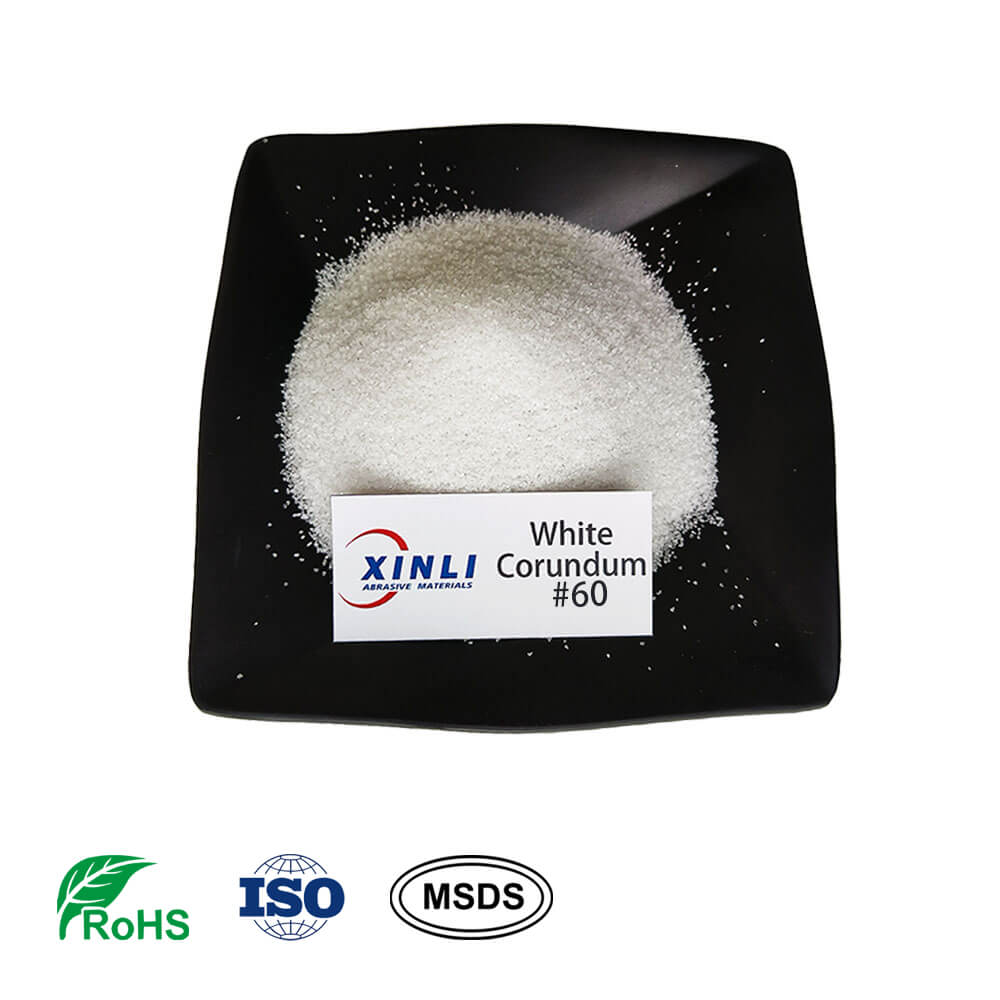 However, physical specifications are only half the story. The core of optimal sourcing lies in the transparency and stability of the supply chain. In 2023, a well-known global bearing manufacturer experienced a sudden increase in impurities in the white fused alumina abrasive supplied by its supplier, causing a 20% drop in the efficiency of its precision grinding production line, forcing a 48-hour emergency shutdown and resulting in losses exceeding $2 million. This incident highlights the importance of thoroughly evaluating suppliers. Truly reliable partners provide complete quality traceability data, including batch-specific titanium impurity content (typically required to be below 0.03%), median crystal size, and bulk density test reports, with key parameters exhibiting quarterly fluctuations of less than 5%. They often invest in smart manufacturing systems to ensure that temperature profile errors do not exceed ±10 degrees Celsius during the melting process above 1000 degrees Celsius from raw bauxite to finished product packaging.
Therefore, finding the best white fused alumina grit is not simply about finding a product catalog or the lowest price. It is a comprehensive value audit involving regression analysis of historical data on the supplier's smelting processes, assessment of their quality control systems (such as Six Sigma levels), and examination of their R&D investment in major industry technological shifts (such as the transition to green and energy-efficient electric arc furnaces). Top-tier procurement teams operate like precision instruments, continuously iterating the definition of "best" abrasive by sharing production data with suppliers—perhaps reducing energy consumption per ton of polishing work by another 5 kWh, or improving the surface stress distribution uniformity of the ground workpiece by 10%. Ultimately, the best abrasives are not only produced in high-temperature electric arc furnaces, but also born in a highly collaborative, trusting, and innovation-driven supply chain ecosystem. This is an invisible asset for winning in modern manufacturing competition.
However, physical specifications are only half the story. The core of optimal sourcing lies in the transparency and stability of the supply chain. In 2023, a well-known global bearing manufacturer experienced a sudden increase in impurities in the white fused alumina abrasive supplied by its supplier, causing a 20% drop in the efficiency of its precision grinding production line, forcing a 48-hour emergency shutdown and resulting in losses exceeding $2 million. This incident highlights the importance of thoroughly evaluating suppliers. Truly reliable partners provide complete quality traceability data, including batch-specific titanium impurity content (typically required to be below 0.03%), median crystal size, and bulk density test reports, with key parameters exhibiting quarterly fluctuations of less than 5%. They often invest in smart manufacturing systems to ensure that temperature profile errors do not exceed ±10 degrees Celsius during the melting process above 1000 degrees Celsius from raw bauxite to finished product packaging.
Therefore, finding the best white fused alumina grit is not simply about finding a product catalog or the lowest price. It is a comprehensive value audit involving regression analysis of historical data on the supplier's smelting processes, assessment of their quality control systems (such as Six Sigma levels), and examination of their R&D investment in major industry technological shifts (such as the transition to green and energy-efficient electric arc furnaces). Top-tier procurement teams operate like precision instruments, continuously iterating the definition of "best" abrasive by sharing production data with suppliers—perhaps reducing energy consumption per ton of polishing work by another 5 kWh, or improving the surface stress distribution uniformity of the ground workpiece by 10%. Ultimately, the best abrasives are not only produced in high-temperature electric arc furnaces, but also born in a highly collaborative, trusting, and innovation-driven supply chain ecosystem. This is an invisible asset for winning in modern manufacturing competition.
However, physical specifications are only half the story. The core of optimal sourcing lies in the transparency and stability of the supply chain. In 2023, a well-known global bearing manufacturer experienced a sudden increase in impurities in the white fused alumina abrasive supplied by its supplier, causing a 20% drop in the efficiency of its precision grinding production line, forcing a 48-hour emergency shutdown and resulting in losses exceeding $2 million. This incident highlights the importance of thoroughly evaluating suppliers. Truly reliable partners provide complete quality traceability data, including batch-specific titanium impurity content (typically required to be below 0.03%), median crystal size, and bulk density test reports, with key parameters exhibiting quarterly fluctuations of less than 5%. They often invest in smart manufacturing systems to ensure that temperature profile errors do not exceed ±10 degrees Celsius during the melting process above 1000 degrees Celsius from raw bauxite to finished product packaging.
Therefore, finding the best white fused alumina grit is not simply about finding a product catalog or the lowest price. It is a comprehensive value audit involving regression analysis of historical data on the supplier's smelting processes, assessment of their quality control systems (such as Six Sigma levels), and examination of their R&D investment in major industry technological shifts (such as the transition to green and energy-efficient electric arc furnaces). Top-tier procurement teams operate like precision instruments, continuously iterating the definition of "best" abrasive by sharing production data with suppliers—perhaps reducing energy consumption per ton of polishing work by another 5 kWh, or improving the surface stress distribution uniformity of the ground workpiece by 10%. Ultimately, the best abrasives are not only produced in high-temperature electric arc furnaces, but also born in a highly collaborative, trusting, and innovation-driven supply chain ecosystem. This is an invisible asset for winning in modern manufacturing competition.