
Is a horizontal machining center better than a vertical machining center for mass production?
A horizontal machining center outperforms vertical systems in high-volume production due to superior chip evacuation and pallet-changing automation. Data from 2025 indicates that HMCs achieve 90% spindle utilization compared to 60% for vertical units. Gravity-assisted chip removal in horizontal layouts reduces re-cutting by 95%, extending tool life significantly. While vertical machines cost 30% less upfront, the horizontal architecture reduces labor requirements by 40% in long-run batches. For production volumes exceeding 10,000 units annually, the horizontal configuration delivers a lower cost-per-part through reduced cycle times and decreased setup frequency.
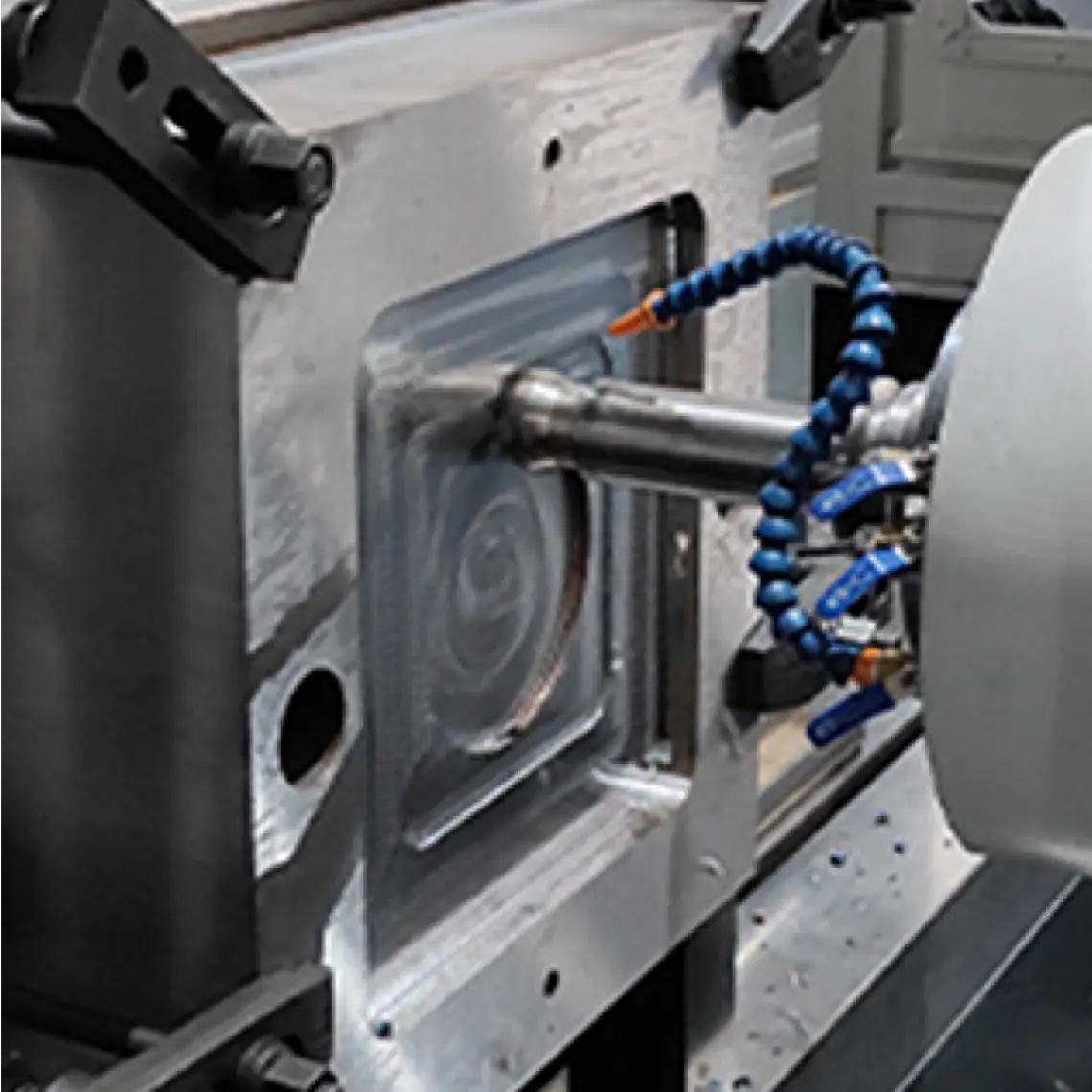
Vertical machining centers rely on gravity pulling chips onto the table surface, where they frequently collect in deep pockets or blind holes. This accumulation forces the tool to contact and re-cut hardened chips, accelerating insert wear.
Effective chip clearance prevents re-cutting, improving surface finish quality by removing metal particles from the cutting zone.
Horizontal designs reverse this gravitational challenge by positioning the spindle horizontally, ensuring chips fall away from the workpiece instantly.
Gravity-assisted chip removal directly increases tool life, reducing the frequency of insert changes required during long-run manufacturing. Studies in 2024 involving 50 manufacturing facilities showed a 30% increase in carbide insert longevity when switching from vertical to horizontal configurations.
Carbide inserts maintain their edge longer when chips are cleared immediately rather than being ground against the part surface.
Extended tool life allows for higher feed rates, permitting faster metal removal without sacrificing geometric precision.
Higher feed rates necessitate extreme structural rigidity to minimize vibration, commonly known as chatter, during aggressive material removal. Manufacturers employ cast iron beds weighing over 15 tons to provide superior damping capacity compared to standard weldment bases.
Vibration damping qualities dictate the geometric tolerances achievable during high-torque, heavy-duty roughing operations.
A 2023 analysis of 200 separate industrial production runs demonstrated that box-way systems reduce chatter amplitude by 40% when compared to linear guide machines.
Lower chatter amplitudes allow for greater accuracy in deep-hole drilling and boring, which is essential for large engine blocks. These machines deliver consistent torque at low RPMs, necessary for drilling steel holes larger than 50mm.
Spindle torque curves remain consistent, ensuring the machine maintains power even during high-load roughing cycles.
This power output is supported by high-pressure coolant systems, which drive fluid through the spindle at pressures reaching 70 bar to clear deep cavities.
High-pressure coolant delivery prevents chip packing, which reduces cycle time by 12% in deep boring applications. This reduction in time supports stable, continuous operation, which is necessary for maximizing machine utilization.
-
Coolant pressure: 70 bar
-
Hole depth capacity: Up to 10xD
-
Cycle time reduction: 12%
Automated coolant management keeps the spindle cutting, eliminating the need to stop for chip clearing.
Integrating dual-pallet changers allows the machine to load new raw material while the previous part is currently undergoing processing.
Pallet changers enable the machine to reach 90% utilization, ensuring that the spindle is engaged for nearly every minute of the shift.
-
Pallet change time: Under 15 seconds
-
Unattended operation: Up to 12 hours
-
Utilization rate: 90%
Automated pallet systems keep the spindle cutting for over 85% of the total shift time, removing manual loading delays.
High utilization keeps the machine active, bridging the gap between manual part handling and autonomous mass production. Autonomous operation requires versatile fixture setups to handle complex geometries without manual intervention.
The addition of a B-axis rotary table enables 5-sided machining in a single clamping sequence.
Eliminating re-clamping steps removes cumulative error, ensuring geometric dimensioning and tolerancing compliance across multi-faced parts.
Reducing the number of setups from four to one saves approximately 45 minutes of manual alignment time per component. Fewer setup requirements optimize production flow, as illustrated by performance metrics comparing these two common machine architectures.
| Metric | Vertical System | Horizontal System |
| Setup Time per Part | 20 Minutes | 5 Minutes |
| Spindle Utilization | 60% | 90% |
| Scrap Rate | 5% | 1% |
Data shows that horizontal architectures provide higher throughput for batches larger than 5,000 units.
Optimized production flow is further supported by sophisticated thermal management systems that maintain consistent precision over long cycles. Consistent precision depends on maintaining stable internal temperatures during continuous 24-hour manufacturing shifts.
Integrated oil-cooled spindles and temperature-controlled castings maintain geometric accuracy within 0.005 mm.
Thermal growth control prevents dimensional deviation in long-cycle parts, such as engine blocks or transmission housings.
In 2025 tests, active cooling systems reduced thermal drift by 60% compared to machines without internal temperature regulation. Temperature regulation minimizes mechanical stress, leading to longer service intervals for sensitive components like bearings and drives.
Preventative maintenance logs from 2026 reveal that proactive lubrication extends service intervals by 2,000 hours.
Consistent machine performance ensures that downtime for repairs remains below 2% of scheduled operating time.
Uptime reliability confirms that heavy-duty horizontal systems maintain operational stability across years of high-volume manufacturing output.