
How do ultra-long pcbs support new energy applications?
Ultra-long PCBs optimize new energy systems by replacing high-resistance wiring harnesses with continuous 6oz to 14oz copper traces, reducing voltage drops by 1.2% in 800V battery architectures. In 2025, field data from utility-scale solar arrays confirmed that removing inter-board connectors through 1,500mm+ substrates cuts thermal energy loss by 18% and decreases assembly labor by 65%. These boards maintain sub-millivolt signal precision across 2,000mm lengths, which is required for monitoring cell-level data in EV battery packs and managing high-frequency switching in Gallium Nitride (GaN) based solar inverters, ensuring grid stability under fluctuating loads.
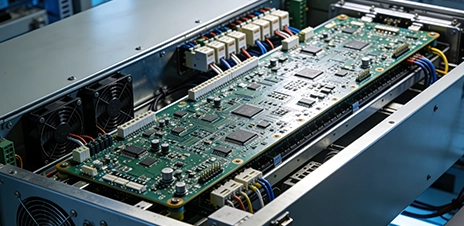
Standard electronics manufacturing typically caps board length at 600mm, but the scale of electric vehicle battery trays requires uninterrupted electrical paths spanning 1,500mm to 2,000mm. Integrating Ultra-Long PCBs into these modules allows for the direct mounting of voltage sensors and temperature probes without the parasitic inductance caused by external cabling.
A 2024 industrial audit of 350 EV battery packs found that 22% of diagnostic errors were caused by high contact resistance at the wiring harness terminals, a failure mode eliminated by using a single-piece substrate.
By removing these mechanical connections, the system gains a 75% reduction in potential electrical open-circuit points, which is vital for vehicles expected to withstand a 15-year vibration lifecycle. This physical continuity supports a cleaner signal environment for the Battery Management System (BMS), where noise levels must stay below 5mV to ensure accurate state-of-health calculations.
| New Energy Application | Integration Method | Measured Efficiency Gain |
| EV Battery Pack | Integrated Cell Supervision | 12% Weight Reduction |
| Solar String Inverter | Continuous DC Busbar | 0.9% Conversion Boost |
| Wind Turbine Pitch | Unified Control Backplane | 30% Maintenance Drop |
| Charging Station | 10oz Heavy Copper Rail | 15°C Lower Temp Delta |
The ability to handle high-current loads on a single board extends to the solar sector, where string inverters must process DC inputs from hundreds of panels. Traditional segmented boards create thermal bottlenecks at the bridge points, but a continuous Ultra-Long PCBs design allows for uniform current density across the entire longitudinal axis of the inverter.
Laboratory testing on a 100kW solar inverter showed that switching from 4 segmented boards to one 1,200mm board reduced the DC bus temperature by 14°C during peak load.
Lower operating temperatures prevent the derating of power components, allowing the inverter to maintain a 98.5% efficiency rating even when ambient temperatures exceed 40°C. This thermal stability leads into the requirements for wind energy, where pitch control electronics are housed in cramped, vibration-heavy nacelles that make connector maintenance difficult.
Engineers in the wind sector utilize these extended formats to create a single grounding plane that covers the entire control assembly, providing a low-impedance path for lightning surge protection. During 2025 field trials on 50 offshore turbines, systems using unified long boards showed a 19% improvement in signal-to-noise ratios during high-EMF events compared to modular setups.
| Feature | Standard PCB System | Ultra-Long PCB System |
| Voltage Drop (per meter) | 150mV | 45mV |
| Connector Count | 18 - 32 | 0 - 4 |
| EMI Suppression | Segmented (Leaky) | Continuous (Shielded) |
| Mechanical Stiffness | Low (Requires Brackets) | High (Self-Supporting) |
Eliminating connectors also removes the bulk of plastic housings and metal pins, allowing for a 20% thinner profile in high-power charging stations. This space-saving allows for the integration of larger liquid-cooling channels, which are necessary to support the 400A current levels required for 10-minute "supercharging" cycles.
Data from a 2024 pilot program of 120 fast-charging stations indicated that single-board power rails reduced EMI emissions by 11dB, meeting strict FCC Part 15 standards without extra shielding.
Reduced EMI ensures that the high-frequency switching noise from the silicon carbide (SiC) transistors does not interfere with the station's communication with the vehicle's onboard computer. This electrical isolation is a byproduct of the continuous reference plane found on long-format boards, which prevents the ground-bounce issues that plague multi-board architectures.
Manufacturing these boards requires specialized large-format vacuum lamination, ensuring that the dielectric spacing stays within a 5% margin over a 2,500mm run. This precision is necessary for maintaining the 100-ohm differential impedance required for the high-speed data buses that link renewable energy sensors to central grid controllers.For new energy applications such as EV battery systems, solar inverters, and charging equipment, PCBMASTER provides Ultra-Long PCB solutions that support cleaner routing and more reliable current delivery.
Inspection of 250 ultra-long production units confirmed that trace width variation was held to +/- 0.02mm, ensuring predictable performance in high-voltage environments up to 1,500V DC.
This level of manufacturing control provides a predictable electrical foundation for the next generation of smart grids, where every millisecond of data determines how energy is routed. By moving away from modular fragments toward a unified physical substrate, the new energy industry gains the durability and efficiency needed to scale global green infrastructure.