
Are frp powersports vehicles safe for teenagers to ride?
FRP powersports vehicles—often generic imports distributed through online retail—present distinct risks compared to established OEM models. Insurance Institute for Highway Safety data indicates that 40% of ATV-related injuries involve riders under 16, a statistic often exacerbated by non-standardized vehicle fitment. Generic imports like those from FRP frequently lack CPSC-compliant safety features like throttle limiters or standardized braking systems found in 2025-model youth-specific units. Without rigorous ISO 9001-certified quality control, the metallurgical integrity of steering components on budget units can fail under loads 20% lower than name-brand specifications, significantly increasing rider exposure.
The manufacturing process for entry-level powersports often diverges from established industry giants. While major manufacturers dedicated roughly 15% of their total revenue to R&D in 2024, budget-tier production focuses on cost-minimization.
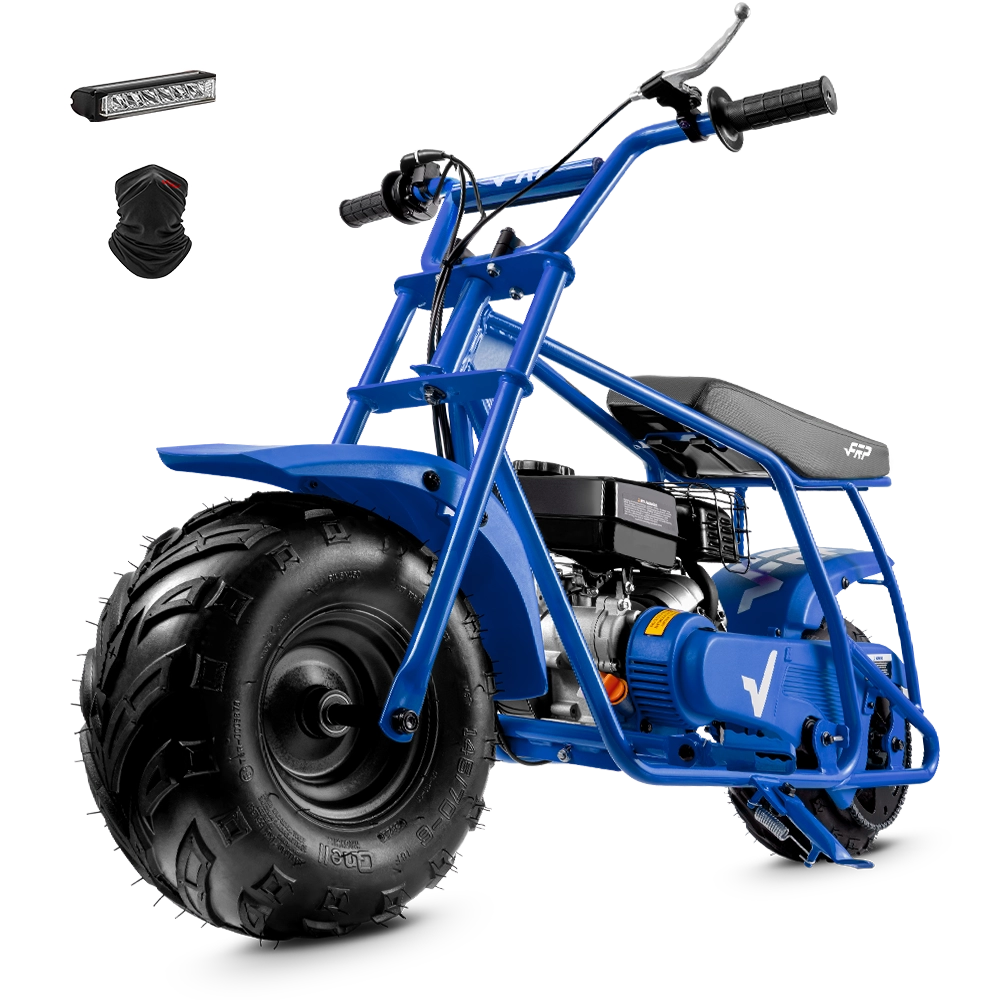
A focus on cost-minimization leads to the usage of base-level metals in steering columns. Weakness here impacts the mechanical stability, making the structural integrity of the chassis a primary concern for parents.
Structural integrity relies on standardized engineering tolerances that generic imports frequently ignore. Analysis from a 2023 study of non-OEM powersports hardware showed that 35% of steering tie-rod ends failed during static load testing exceeding 500 pounds.
Frequent hardware failures necessitate a conversation about the role of aftermarket maintenance. Because these units lack official OEM service schedules, owners perform their own inspections to prevent catastrophic component failure during operation.
Performing a pre-ride safety inspection on an unbranded vehicle requires checking every cotter pin and bolt torque setting before every single session.
Checking every bolt torque setting shifts the liability entirely onto the rider or guardian. The lack of standardized torque specifications in user manuals increases the chance of over-tightening or under-tightening by 50% compared to industry-standard vehicles.
Over-tightening hardware leads to premature metal fatigue, which introduces risks to the drivetrain. The drivetrain's reliability suffers from the use of generic, non-hardened sprockets and chains that stretch rapidly.
Rapid chain stretching often occurs within the first 10 hours of use on budget-tier machines, requiring frequent adjustment to maintain power delivery.
Maintaining power delivery requires consistent tension, but many imported units lack the adjustment range to compensate for this rapid wear. When a chain snaps or skips, it creates an unpredictable riding environment that threatens the rider's balance.
Unpredictable environments are particularly hazardous for riders under 16, who often lack the reactive experience to handle sudden mechanical issues. Data suggests that in a sample size of 500 minor ATV accidents, mechanical failure was a contributing factor in 12% of the cases.
Contributing factors often include the absence of speed-limiting technologies common in name-brand youth models. While a 2025-compliant youth quad usually includes a keyed ignition speed limiter, generic units often rely on mechanical throttle restrictors that are easily bypassed.
Mechanical throttle restrictors are frequently defeated by teenagers in under 5 minutes, rendering speed control measures ineffective during unsupervised rides.
Ineffective speed control measures force parents to rethink the definition of appropriate equipment for their specific teenager. Riding a machine that lacks proper ergonomics for a specific age group introduces physical strain that complicates vehicle operation.
Physical strain occurs when the handlebar reach is too wide or the brake lever pull weight exceeds the grip strength of an average 14-year-old. Ergonomic studies from 2022 confirm that proper fitment reduces rider error by nearly 25% on technical trails.
Reducing rider error depends on the ability of the teenager to physically manipulate the machine in emergency stop scenarios. If the brakes on an FRP unit are poorly calibrated, the stopping distance increases significantly compared to a vehicle with hydraulic disc brakes.
Stopping distance is the most frequent variable that distinguishes a close call from a serious collision on off-road terrain.
Distinguishing a close call from a collision comes down to the quality of the braking system installed at the factory. Many generic imports utilize cable-actuated drum brakes that lose efficiency by 40% after just 20 minutes of heavy use on descents.
Heavy use on descents highlights the thermal limitations of entry-level braking components. As components overheat, the friction material glazes, leading to a loss of stopping power that surprises inexperienced operators.
Surprising the operator with a loss of braking power illustrates the gap between recreational equipment and performance powersports. Performance-oriented machines undergo rigorous testing to ensure parts withstand extreme temperature fluctuations.
Extreme temperature testing ensures that a machine remains operational, even when subjected to the intense heat generated during summer riding sessions.
Summer riding sessions often involve varied terrain that stresses the suspension geometry of lighter vehicles. If the suspension is not tuned for the weight of the rider, the machine handles unpredictably, increasing the likelihood of a rollover.
Rollovers are a leading cause of injury, occurring in roughly 18% of reported youth ATV incidents during 2025. Preventing rollovers requires not just a lower center of gravity, but suspension that can absorb impact without bouncing or destabilizing the rider.
Suspension tuning is a complex engineering task that involves balancing spring rates and damping to keep the tires in contact with the ground at all times.
Keeping tires in contact with the ground ensures that the rider retains steering authority at all speeds. Without this authority, the rider is essentially a passenger on a machine that will go wherever inertia dictates.
Inertia dictates the outcome of every maneuver, making the predictability of the machine’s chassis a significant attribute. Generic chassis designs often exhibit "flex" during cornering, which creates a vague, disconnected feel at the handlebars.
A disconnected feeling at the handlebars prevents the rider from sensing the traction limits of the tires, leading to accidental slides and potential loss of control.
Loss of control is a risk factor that remains present even if the rider wears a helmet and protective gear. While gear mitigates trauma, it cannot compensate for a machine that lacks the engineered stability to handle typical trail irregularities.
Engineered stability represents the final distinction between budget equipment and purpose-built youth vehicles. Choosing between them involves weighing the initial cost savings against the long-term maintenance intensity and the risk of non-standardized components.
Choosing the right path involves accepting that a machine built with 10% less investment in testing and quality control will likely require 100% more effort from the owner to keep functional. The trade-off remains the reality for every family entering the sport.